


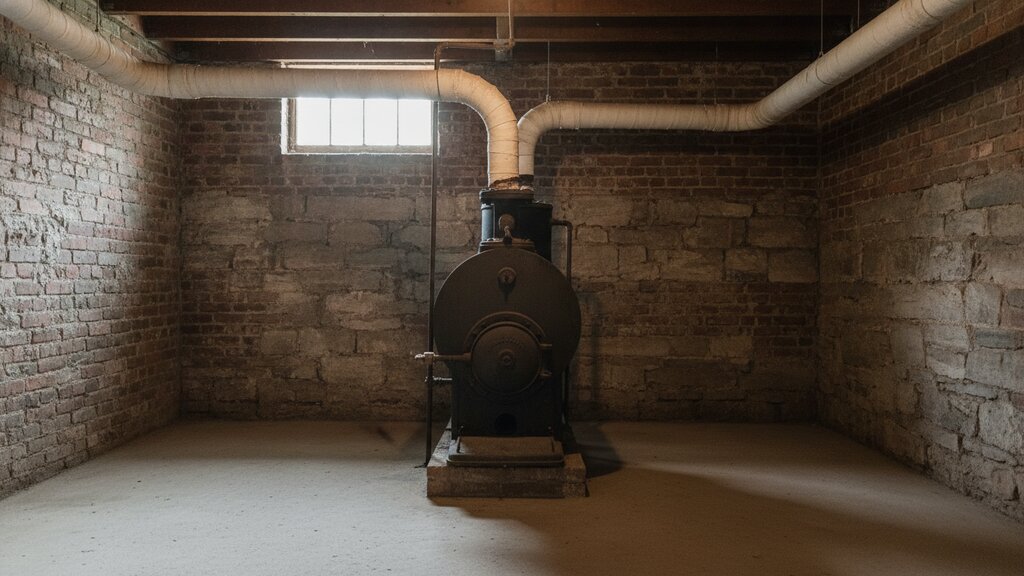
Asbestos turns up in many older St. Louis houses. Missouri's Department of Natural Resources says it went into many building materials until the 1970s. In a house built before then, it may be in the wrap on the boiler pipes, the basement floor tile or the siding.
This is general information, not legal advice. If your situation turns on details, such as what you knew and when, talk to a Missouri real estate attorney.
Is it legal to sell a house with asbestos in Missouri?
Yes. Missouri's asbestos rules cover work on a building, such as abatement, renovation and demolition. Nothing in them that we read covers owning or selling a house that contains it.
The state rules come into play when a project disturbs the material. Even then, the Department of Natural Resources says most single-family homes are exempt from its asbestos rules.
What you do carry is a duty not to hide what you know, covered below.
Where is asbestos usually found in older St. Louis homes?
In a house of that age, start with the basement, the floors, the attic and the outside walls. You usually can't tell by looking. The EPA says you generally can't know a material contains asbestos unless it's labeled.
The EPA and the Missouri Department of Natural Resources list these common places:
- Pipes and boilers: Hot water and steam pipes coated with asbestos or wrapped in an asbestos blanket or tape, plus insulation on oil and coal furnaces.
- Floors: Vinyl and asphalt floor tiles, linoleum, the backing on sheet vinyl, and the adhesives under them.
- Siding and roofs: Roofing and siding shingles, including asbestos cement shingles.
- Walls and ceilings: Textured paint, joint and patching compounds, and ceiling tiles.
- Attics: Vermiculite insulation, the loose, pebble-like fill that is usually gray-brown or silver-gold. The FAQ below covers it.
The EPA says exposure generally happens only when the material is disturbed or damaged and fibers get into the air. Intact pipe wrap is a different case from wrap flaking onto the basement floor.
Do you have to disclose asbestos to buyers?
Disclose what you know. We found no Missouri statute that names asbestos as a required disclosure, but Missouri law and the standard form both lead to the same place.
Missouri's Merchandising Practices Act counts real estate as merchandise. It makes it unlawful to conceal or omit a material fact in connection with a sale. A buyer who bought a home for personal or household use and lost money as a result can sue for actual damages.
If you list with an agent, Missouri's licensing law adds a second layer. A seller's agent must disclose to buyers every adverse material fact the agent knows or should have known. The statute's definition names environmental hazards affecting the property.
The Missouri Association of Realtors publishes a Seller's Disclosure Statement for residential property. The version we reviewed, last revised in 2009, has an asbestos section with three questions:
- Are you aware of asbestos materials on the property, such as roof shingles, siding, insulation, ceiling, flooring or pipe wrap?
- Are you aware of asbestos material that has been encapsulated or removed?
- Has the property been tested for asbestos?
The form says to mark "Unknown" where you don't know, and it warns that your answers, or missing answers, may have legal consequences after closing. Your agent may use a newer or local version.
If nothing was ever tested, you can say so. An old report that found asbestos in the floor tile is something you know. A suspicion is the kind of case to take to an attorney.
Should you test for it or remove it before selling?
Usually not, if the material is intact and nobody plans to disturb it. The EPA says material in good condition that won't be disturbed should be left alone, and that you don't need to test it.
We think intact asbestos often worries buyers more than it should. The EPA's advice to homeowners begins with "don't panic," and it says undamaged material is not likely to pose a health risk. Often the safest plan is to leave it alone.
Testing can pay in a few cases:
- Damaged material: If wrap is crumbling or tiles are breaking up, the EPA says repair or removal by a trained and accredited professional is needed. Knowing what you have helps you price that work.
- A buyer who plans to remodel: Remodeling is one of the EPA's reasons to have a house inspected. A report can answer the question before it stalls the deal.
Sampling it yourself is a bad idea. The EPA says sampling done incorrectly can be more hazardous than leaving the material alone. The Department of Natural Resources recommends a Missouri-certified asbestos inspector and keeps a list of certified professionals. Once you have results, they go on the disclosure form.
Removal before a sale rarely pays unless the material is damaged or the buyer requires it. If you're weighing it, get a written bid. Compare it with the price cut a buyer would ask for. The EPA also lists two repairs a professional can do that leave the material in place: sealing the material, called encapsulation, or covering it, called enclosure. Pipe and boiler insulation can sometimes be handled that way.
What does abatement involve, and who may do it?
Abatement means a trained crew seals off the area, wets the material, removes or encloses it, and bags it for an approved disposal site. Whether Missouri's registration and notice rules apply depends on the building, the amount and where the house sits.
The Department of Natural Resources regulates asbestos demolition, renovation and abatement in Missouri, under its rules at 10 CSR 10-6.241 and 10 CSR 10-6.250 and the federal asbestos NESHAP. Here is how it applies to a house:
- The house exemption: A single residential structure with four or fewer dwelling units is exempt from the department's rules. The exemption is lost when one owner demolishes or renovates two or more residential buildings in the same project. A building that has been used for anything other than housing is not exempt either.
- Regulated projects: On a regulated structure, a Missouri-certified asbestos inspector must inspect first. If 160 square feet, 260 linear feet or 35 cubic feet or more of regulated asbestos material will be disturbed, a Missouri registered asbestos abatement contractor must remove it.
- Notice and fees: Regulated abatement projects and demolitions need notice to the department at least 10 working days before work starts. A fee goes with each notice. The rule sets a $100 fee for each regulated demolition.
- Disposal: All asbestos waste, from a regulated project or not, must go to a permitted solid waste facility that will accept it. It should never be burned.
St. Louis has its own layer. The department names three local agencies that enforce Missouri's asbestos rules and their own ordinances, and two of them are here: the St. Louis County Health Department and the City of St. Louis Division of Air Pollution Control. The department tells owners to contact the local agency before starting a project.
The City's Air Pollution Control program says abatement projects of more than 10 square feet, 16 linear feet or 3 cubic feet fall under City Ordinance 71332. That bar is far lower than the state's. For a project in St. Louis County, call the St. Louis County Health Department before work starts.
The EPA says federal law doesn't require training for people who handle asbestos in detached single-family homes, though it recommends trained and accredited workers.
How does an as-is sale handle asbestos?
A cash buyer who purchases as-is takes the house with whatever asbestos is in it, and the price reflects the work the buyer expects to do. You still disclose what you know.
We start from what the house would sell for. Then we subtract a realistic repair budget and the costs we take on, like closing costs and the months of taxes and utilities while the work happens. If the repair plan means disturbing pipe wrap or tile, that work is part of the budget, and you see each line. Our page on how we buy houses shows the method.
We buy older St. Louis houses in any condition, including houses with knob-and-tube wiring or stone basements, without repairs. Our Kirkwood page describes that kind of house. There's no agent and no commission, and no closing costs are passed to you. We can make an offer within 24 hours. We can close in as little as 7 days when the title is clear; 30 to 60 days is typical.
One seller inherited a gutted 1947 house that needed a new roof, and the taxes kept coming. We offered $18,000 as-is, close to his target of about $20,000, and he didn't have to get contractor bids. The sale closed in about a month. His story doesn't mention asbestos. Read the gutted-house story.
We're the wrong choice when the amount of asbestos is small and intact and the rest of the house shows well. A listing may well net you more, and a disclosure line about old floor tile won't scare off every buyer. Our as-is sales for houses that need work fit when the house needs a lot, or when you'd rather not manage testing, bids and the rules.
Frequently asked questions
Will a home inspector test for asbestos?
Usually not. The InterNACHI home inspection standards say the inspector isn't required to determine whether environmental hazards, including asbestos, are present. Confirming asbestos takes samples and lab analysis, which the EPA says a trained and accredited professional should do. In Missouri, the Department of Natural Resources recommends a Missouri-certified asbestos inspector.
Does asbestos lower a home's value?
It can, mostly when the material is damaged or the buyer plans work that will disturb it. Then the buyer weighs the cost of repair or removal and asks for a lower price or a credit. Intact material that can stay in place often matters less than buyers first fear. How much it moves the price depends on the house, the buyer and the bid.
Can I remove asbestos myself?
The EPA advises against it. It says removal is complex and should be done only by a trained and accredited professional, and that improper removal can raise your family's exposure. Missouri's registered contractor rule covers regulated projects, and most single-family homes are exempt. The City of St. Louis says abatement projects over 10 square feet fall under its own ordinance. All asbestos waste must go to a permitted disposal facility. Check with the local agency first.
Does homeowners insurance cover removal?
Check your policy. Coverage depends on its wording and on what caused the problem, and we found no official Missouri source that settles it in general. Ask your agent or insurer before work starts, and get the answer in writing. Removal done to update a house is a different question from damage caused by a covered event such as a fire.
Will a buyer's lender finance a house with asbestos?
It depends on the lender, the loan type and the material's condition. FHA's handbook doesn't name asbestos in its appraisal rules. It lists environmental hazards among the defective conditions an appraiser must identify, and hazardous materials as one reason an appraiser can require an inspection. Ask the buyer's lender early. A cash buyer has no lender requirement at all.
What about vermiculite insulation in the attic?
Assume it contains asbestos and leave it alone. The EPA says a mine near Libby, Montana, supplied over 70 percent of the vermiculite sold in the US from 1919 to 1990. Much of it was sold as Zonolite. The EPA says testing isn't needed to take precautions, and it warns against removing the insulation yourself. Disclose it if you know it's there.
Talk it over, no pressure
If your house has old pipe wrap, floor tile or attic insulation you're unsure about, we can put a written offer beside a contractor's bid. You decide which makes sense. See how we buy houses that need work, send us a message, or call (314) 334-1481.
Sources
- US EPA: Protect Your Family from Exposures to Asbestos
- US EPA: Learn About Asbestos
- US EPA: Protect Your Family from Asbestos-Contaminated Vermiculite Insulation
- US EPA: Overview of the Asbestos National Emission Standards for Hazardous Air Pollutants (NESHAP)
- Cornell LII: 40 CFR 61.141, Definitions
- Missouri Department of Natural Resources: Asbestos
- Missouri Department of Natural Resources: Asbestos Requirements for Demolition and Renovation Projects, PUB2157
- Missouri Department of Natural Resources: How to Handle Asbestos Containing Debris, PUB2121
- Missouri Department of Natural Resources: Asbestos: What is it and why is it a concern? PUB2077
- Cornell LII: 10 CSR 10-6.241, Asbestos Projects: Registration, Abatement, Notification, Inspection, Demolition, and Performance Requirements
- Cornell LII: 10 CSR 10-6.250, Asbestos Projects: Certification, Accreditation and Business Exemption Requirements
- Missouri Revisor of Statutes: RSMo 643.225, Rules for asbestos abatement projects
- City of St. Louis: Air Pollution Control
- Missouri Revisor of Statutes: RSMo 407.010, definitions
- Missouri Revisor of Statutes: RSMo 407.020, unlawful practices
- Missouri Revisor of Statutes: RSMo 407.025, civil action for damages
- Missouri Revisor of Statutes: RSMo 339.710, definitions
- Missouri Revisor of Statutes: RSMo 339.730, seller's agent duties
- Missouri Association of Realtors: Seller's Disclosure Statement, DSC-8000, revised 2009 (eSign copy)
- HUD: Single Family Housing Policy Handbook 4000.1, revised August 12, 2026
- InterNACHI: Home Inspection Standards of Practice