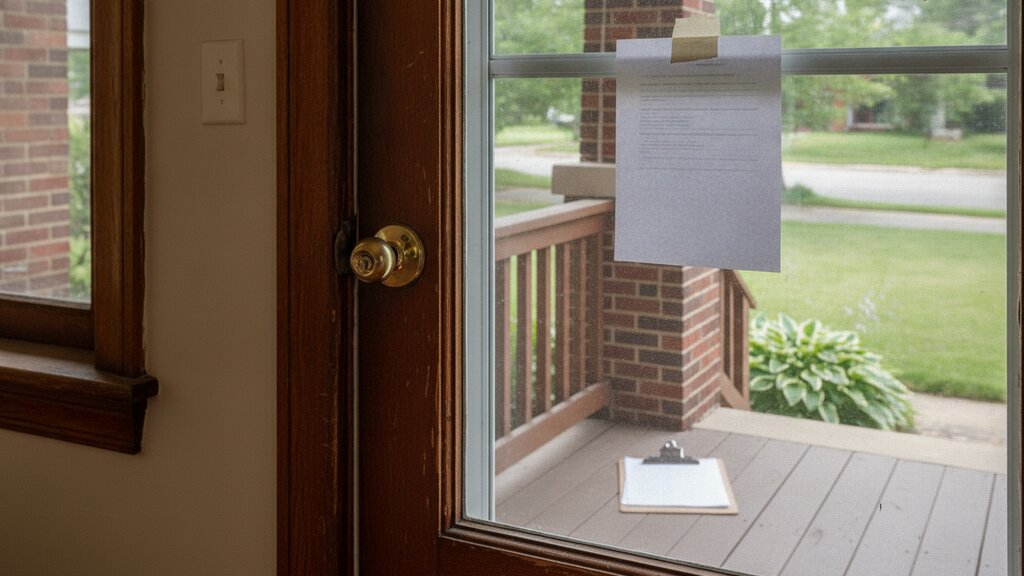




Federal law also stops the lender from calling the whole loan due just because the house passed to a relative on the owner's death. That gives the family time to decide whether to keep the house, rent it or sell it.
This is general information, not legal advice. Probate, title and loan terms differ from family to family, so talk to a Missouri real estate or probate attorney about your own case.
Who is responsible for the mortgage when you inherit a house in Missouri?
Nobody becomes personally liable on the loan just by inheriting the house. The house itself stays pledged for the debt, so the loan has to be paid one way or another.
The CFPB, citing the Restatement of property law, puts it this way: a person who acquires a mortgaged house does not, by that alone, become personally liable on the loan. Only an express assumption of liability does that. A co-signer or co-borrower is different, because that person signed the note and still owes on it.
The estate can still be involved. In Missouri, creditors generally must file claims in probate within six months after the first published notice of letters, or the claims are barred. That deadline does not stop a lender from enforcing its mortgage against the house, though.
The practical question is who keeps the payments going until the house is kept or sold.
Can the lender call the loan due because the owner died?
Not because of the death alone, for most family homes. The Garn-St Germain Act bars a lender from using a due-on-sale clause when a home of fewer than five units passes to a relative because the borrower died.
The same law protects a transfer where the borrower's spouse or children become owners, and a transfer to a surviving joint owner.
The federal rule that carries out this law, 12 CFR 191.5, is narrower. It protects a transfer to a relative on the borrower's death when the relative occupies or will occupy the house. It covers loans on a home the borrower lived in or planned to live in, and it does not apply to reverse mortgages. It also lets a lender enforce the clause later if something happens that takes the transfer outside the exemption.
A relative who moves in has the clearest protection. If you plan to rent the house out or leave it empty for a long stretch, ask a Missouri real estate attorney how these rules fit your loan before you rely on them.
The CFPB has also said an heir who already holds title can be added to the loan without the lender running a new ability-to-repay review. Some servicers still push heirs to refinance. The CFPB says successor homeowners generally don't have to.
How do you get information from the servicer if you are not on the loan?
Write to the servicer, say the borrower has died, and say you may be a successor in interest. Federal rules then require the servicer to tell you which documents it needs to confirm you.
Regulation X uses the term "successor in interest" for a relative who receives the house on a borrower's death, among other family transfers. A written request should give the borrower's name and enough detail to find the loan. The servicer must answer with a written list of the documents it needs and a phone number for help.

The CFPB lists the kind of proof servicers ask for: the death certificate, the executed will, or a letter from the executor. What you can get varies by state. If a Missouri estate is open, the probate court's letters testamentary or of administration show who the personal representative is.
For a written information request, the servicer must acknowledge it within five business days. It must then answer within 30 business days, and it can extend that once by 15 business days with written notice. Use the address the servicer names for written requests.
Once the servicer confirms you, you are treated as a borrower under the federal servicing rules. That means statements, account information and, where the loan qualifies, review for a loan modification. You get these without signing on to the debt.
Small servicers are exempt from the rule that requires these successor policies, though the written request process still applies to them.
Should you keep paying the mortgage while the estate is settled?
In most cases, yes. Payments protect the house and its equity while the family decides. If the loan falls behind, the lender can still enforce the mortgage against the house, estate or no estate.
The CFPB says successor homeowners have a right to keep making payments and to get information about the loan, without assuming liability or refinancing.
Who pays is a family and estate decision. Some families pay from estate funds through the personal representative. In others, the heir who wants the house pays. A probate attorney can tell you what the estate can pay and how to account for it.
The other bills keep coming too. Missouri law lets an independent personal representative pay taxes, insure estate assets and make ordinary repairs. A house sitting empty still needs insurance, and the property taxes still come due.
Our seller story about an inherited gutted house shows what that holding period can cost. The 1947 house was gutted and needed a new roof, and the back taxes kept climbing while it sat. The heir couldn't afford the rehab. We bought it as-is for $18,000, close to his $20,000 target, and the sale closed in about a month. That story doesn't involve a mortgage, but the carrying costs work the same way.
What are your options: keep, rent, list or sell as-is?
You have four realistic paths, and the right one depends on who wants the house and what it needs. Keeping it can be the cheapest path when someone in the family wants to live there.
- Keep it: A relative who moves in can usually keep the existing loan and its rate, with no selling costs and no new loan. You still need the servicer to confirm you, and if siblings share the house, they have to agree on who keeps it.
- Rent it: Rent can cover the payment, but you become a landlord, and the due-on-sale protection is clearest for a relative who lives there. Talk to an attorney before you sign a lease.
- List it: If the house is in good shape and the family has a few months, an agent will often bring the highest price. The estate pays commission and seller costs from the proceeds.
- Sell as-is: If the house needs work or the family lives elsewhere, a direct sale skips repairs, cleaning and showings. We buy as-is, in any condition, and we pay all closing costs.
We pay fair prices, but not always full market value. For houses needing repairs, we calculate fair prices by subtracting repair costs. Our offer starts from what the house would sell for, then subtracts a realistic repair budget and the costs we take on, and you see each line.
Brendan M. went through this in 2019. In his Google review, he wrote that his grandmother had passed away and left the family a house "that needed lots of repairs and we couldn't do the repairs ourselves." He wrote that Chris met them at the house, went over the repairs and gave them "a really fair offer, with fast closing." All they had left to do was "sign at the title company and receive our check."
Our page on selling an inherited house in St. Louis explains how we work with heirs, including heirs who live out of state.
How does a sale pay off the inherited mortgage?
The title company pays the loan from the sale money at closing. The heirs or the estate get what's left after the payoff and selling costs, so nobody needs cash on hand to clear the loan.
Before closing, the title company orders a payoff statement from the servicer. Federal rules require the servicer to send an accurate payoff figure within seven business days of a written request, with exceptions such as reverse mortgages. Each figure is good as of a set date, so a moved closing needs a new one.
The person who signs the deed depends on how the house passed. With a recorded beneficiary deed, the named beneficiary owns the house and signs. In an estate under independent administration, the personal representative can sell real estate without a court order. Our posts on selling a house with a mortgage and selling a probate property in St. Louis walk through both.
We can make an offer within 24 hours. We can close in as little as 7 days when the title is clear; 30 to 60 days is typical. You get a dedicated transaction coordinator for the sale.
Frequently asked questions
Do I have to pay my parent's mortgage with my own money?
No, unless you co-signed the loan or later agree to assume it. Inheriting a house does not make you personally liable on the mortgage. The debt stays tied to the house, though, so if nobody pays, the lender can foreclose. Payments can come from estate funds or from the heir who wants the house, and a sale pays off the loan at closing. Ask a probate attorney before you pay estate bills from your own pocket.
Can I refinance an inherited house?
Yes, once the house is in your name, you can apply for a new loan like any other owner, and the new loan pays off the old one. You usually don't have to. The CFPB says successor homeowners generally can keep the existing loan without refinancing, and that some servicers push refinancing when it isn't needed. If the old rate is lower than today's rates, keeping the existing loan may cost less.
What if the house is worth less than the loan?
Then a sale won't cover the full payoff, and the lender has to agree to take less. The CFPB calls this a short sale and says to ask the lender to waive the remaining balance in writing. Heirs who never signed the loan aren't personally liable for the gap. The estate's position depends on Missouri probate rules and the loan, so talk to a probate attorney before you agree to anything.
What if there are several heirs?
If an estate is open, the personal representative handles the sale, and under independent administration can sell without a court order. If the house passed outside probate to several people, each one holds a share, and the title company will want every owner to sign. When the family disagrees about keeping the house, a written offer set beside an agent's estimate gives everyone the same numbers.
Does the house have to go through probate first?
Not always. A house with a recorded beneficiary deed passes to the named beneficiary at death without probate. A house in your parent's name alone usually goes through probate. You can often sign a contract once a personal representative is appointed, before the estate closes. Our post on selling a probate property in St. Louis covers the steps.
What if there is a reverse mortgage instead?
A reverse mortgage works differently. The CFPB says it typically must be repaid, usually by selling the home, when the last borrower dies, and the federal due-on-sale rule discussed above excludes reverse mortgages. Read our post on selling a house with a reverse mortgage for the timeline and who signs.
When you're ready
If you've inherited a house with a mortgage, we can put a written offer beside the payoff figure so the family can compare. The choice stays yours, and there's no rush. See how we work with heirs on our inherited house page, send us a message, or call (314) 334-1481.
Sources
- Cornell LII: 12 U.S.C. 1701j-3, Preemption of due-on-sale prohibitions
- Cornell LII: 12 CFR 191.5, Limitation on exercise of due-on-sale clauses
- Cornell LII: 12 CFR 1024.30, Scope
- Cornell LII: 12 CFR 1024.31, Definitions
- Cornell LII: 12 CFR 1024.36, Requests for information
- Cornell LII: 12 CFR 1024.38, General servicing policies, procedures, and requirements
- Cornell LII: 12 CFR 1026.36, Prohibited acts or practices and certain requirements for credit secured by a dwelling
- CFPB: How do I get mortgage information about a home I inherited?
- CFPB: Issue Spotlight: Homeowners face problems with mortgage companies after divorce or death of a loved one (2024)
- CFPB: CFPB Clarifies Mortgage Lending Rules to Assist Surviving Family Members (2014)
- CFPB: What is a short sale?
- CFPB: What happens to my reverse mortgage when I die?
- Missouri Revisor of Statutes: RSMo 461.025, Deeds effective on death of owner
- Missouri Revisor of Statutes: RSMo 473.360, Limitations on filing of claims
- Missouri Revisor of Statutes: RSMo 473.780, Independent administration
- Missouri Revisor of Statutes: RSMo 473.810, Powers and duties of independent personal representative