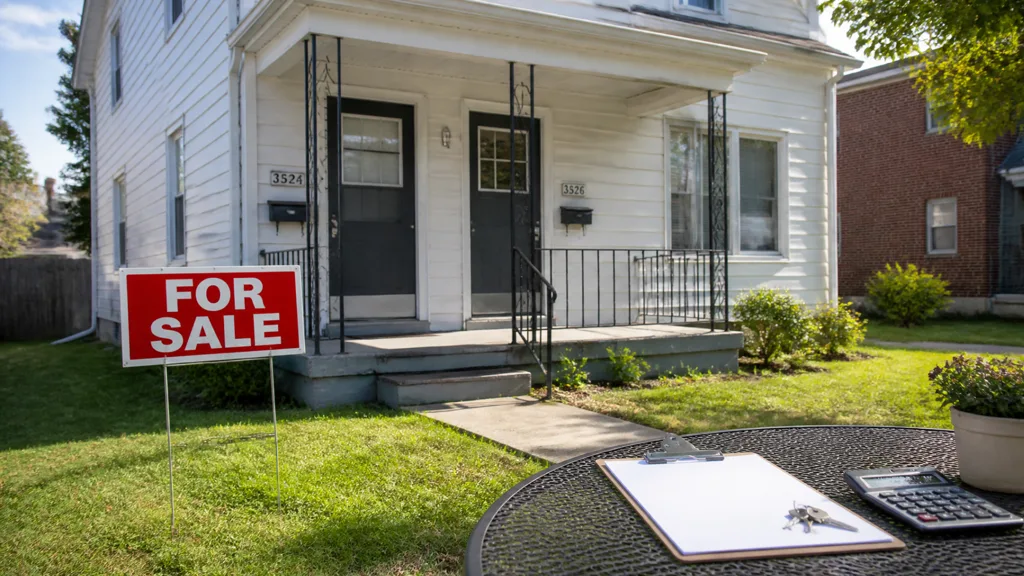



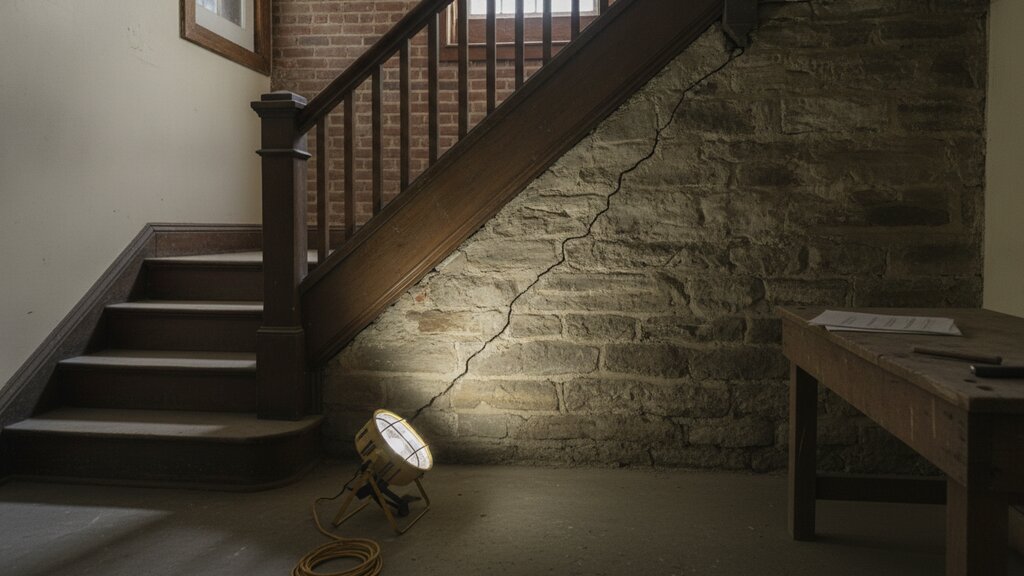
Older St. Louis houses often sit on stone or brick basement walls. When a wall bows, a crack opens or the basement takes water, you can repair it before you list, give the buyer a credit, or sell the house as-is.
A hairline crack with a clean report from a structural engineer may barely affect a listing. Selling as-is makes more sense when the problem is bigger than that, or when you'd rather not manage a repair at all.
Can you sell a house with foundation problems in Missouri?
Yes. The legal side of a Missouri sale is mostly about disclosure: what you know about the foundation and what you tell the buyer.
The practical limits come from the buyer's loan. FHA, VA and conventional lenders all check structural soundness, and a serious foundation problem can hold up a loan until it's repaired. VA's buyer guide says the appraisal shows whether the house meets VA's basic property requirements.
Fewer buyers can close as a result, so foundation trouble tends to surface as a lower price, a repair request or a canceled contract. The useful question, then, is whether your buyer will pay with a mortgage or with cash.
What do you have to disclose about the foundation?
You disclose what you know. Missouri law and the Missouri Realtors form both point that way, and selling as-is doesn't change it.
Missouri's Merchandising Practices Act counts real estate as merchandise and makes it unlawful to conceal or omit a material fact in connection with a sale. A buyer who bought a home for personal or household use and lost money as a result can sue for actual damages.
With an agent, Missouri's licensing law adds a second layer. A seller's agent must disclose to buyers every adverse material fact the agent knows or should have known, and the statute's definition includes the property's physical condition and material defects. The agent doesn't have to inspect for problems but can't keep a known one quiet.
The Missouri Association of Realtors publishes a Seller's Disclosure Statement for residential property. The version we reviewed asks about the foundation in three places:
- Construction: problems with the footings, foundation, walls or other load-bearing parts, and any repairs to them.
- Basement and crawl space: dampness, water leakage or water collecting, and any attempts to control it.
- Soil and drainage: fill, expansive soil or sinkholes, and any earth movement, flood, drainage or grading problems.
The form warns that a seller's answers, or missing answers, may have legal consequences after closing. By signing, you agree to tell the buyer in writing about new information that turns up before closing, including what an engineer finds after the house is under contract.
If your situation turns on details, such as a problem you only suspect, talk to a Missouri real estate attorney. This guide is general information, not legal advice.
What foundation problems show up in older St. Louis houses?
The usual ones are worn mortar, cracked or bowing walls, settling and water. Most trace back to the age of the house and the ground under it.
St. Louis has built with local limestone since its colonial years. The City's preservation plan says limestone went into houses, foundations and chimneys. Older masonry wears in a few predictable ways:
- Mortar that crumbles or falls out between the stones. This Old House says stone foundations need periodic repointing, which helps keep water out.
- Horizontal or stair-step cracks in brick or block walls, which This Old House says suggest structural strain.
- A wall bowing inward, which HomeAdvisor ties to expansive clay, weak fill or poor drainage.
- Settling. Missouri's Department of Natural Resources says sinkholes can affect home foundations, and a Washington University geologist said in 2007 that St. Louis County has thousands of sinkholes people don't know about.
- Water. The Metropolitan St. Louis Sewer District says stormwater can enter through foundation cracks after heavy rain, and it treats that as the homeowner's responsibility.
An FHA appraiser looks for the same signs. HUD's handbook lists a settling or bulging foundation wall, cracked masonry walls, standing water against the foundation and an excessively damp basement as reasons to require an inspection by a qualified professional.
On stone, the repair method matters. The National Park Service's guidance on historic masonry says older mortar was largely lime and sand, and that new mortar should be softer or more permeable than the brick or stone around it. Repointing done badly can damage the masonry, so ask any mason what mortar they plan to use.
Should you get a structural engineer's report before selling?
Usually, yes, if you plan to list. A report tells you whether a crack is cosmetic or structural, and you and the buyer work from the same facts.
HomeAdvisor puts a foundation inspection report at $340 to $780 and says cracks wider than 1/8 inch call for a structural engineer, who has no stake in selling you a repair. This Old House's 2026 guide puts a report at $500 to $1,000.
A clean report can save a financed sale. Fannie Mae lets a lender accept a professional report, based on an inspection, that dampness or settlement poses no threat of structural damage. If your crack turns out to be cosmetic, listing is probably the better path.
Once you have the report, its findings are something you know, and they go on the disclosure. If you expect to sell as-is for cash anyway, ask the buyer whether they need one before you pay for it.
Is it worth repairing the foundation before you sell?
Sometimes. A small, clear repair can pay for itself by keeping financed buyers in the running. A large or uncertain one often costs more than it adds.
Published national ranges:
- Sealing cracks: $250 to $800, according to HomeAdvisor and This Old House.
- Waterproofing: about $3,000 on average for interior systems and $7,000 for exterior work, and $20,000 or more for a full exterior dig with drains and membranes, according to This Old House's 2026 guide.
- Bowing walls: $4,000 to $12,000 for steel or carbon fiber strips, according to HomeAdvisor. Today's Homeowner's 2026 guide puts wall anchors at $80 to $150 per foot.
- Settling: $5,000 to $25,000, according to HomeAdvisor, with piers at $1,000 to $3,000 each.
- Stone foundations: $400 to $20,000 in Bob Vila's guide, updated in 2024.
This Old House puts a typical foundation repair at $2,224 to $8,134, averaging $5,179, and notes that houses built before the 1950s often lack proper footings. St. Louis prices can differ from these national figures, so get local quotes.
Repairing makes sense when the fix is clear and the rest of the house shows well, since you keep FHA and VA buyers. It makes less sense when the engineer calls for anchors, piers or a rebuild, when the water keeps coming back, or when the house needs a lot besides the foundation. Work can also uncover more, and This Old House suggests keeping $1,000 to $2,500 extra for surprises.
A credit is the middle path: you list now and take the repair estimate off the price. It doesn't always save the deal, because the buyer's lender may still want the work done before closing.
How does an as-is cash sale handle foundation issues?
A cash sale has no lender, so there's no appraisal condition or repair requirement to clear. You still disclose what you know, and the price reflects the repair.
We start from what comparable updated houses nearby have sold for, then subtract a realistic budget for the repairs and the costs we take on, like closing costs and the months of taxes and utilities while the work happens. You see each line. Our FAQ says it plainly: "We pay fair prices, but not always full market value. For houses needing repairs, we calculate fair prices by subtracting repair costs."
Mary's mother-in-law, 85, had moved into a nursing home, and Mary's husband held power of attorney. The house had foundation concerns and about $41,000 left on the mortgage. We worked from a range of about $47,000 to $62,000, and our team coordinated the payoff. Mary's story has the rest.
David's basement had taken water two to three years earlier. His wife had taken a government job overseas, and they had roughly 80 to 90 days to close. He wanted at least $260,000, and our offer met that target, as David's story explains.
We buy older houses with stone basements and original systems without repairs, as our Kirkwood page describes. You pay no agent commission, and no closing costs are passed to you. We can make an offer within 24 hours. We can close in as little as 7 days when the title is clear; 30 to 60 days is typical.
We're the wrong choice when the problem is small. If the engineer calls the crack cosmetic and the rest of the house is in good shape, you may well net more by listing. Our as-is sales for houses that need work fit when the repair is big or uncertain, or more than you want to take on.
Frequently asked questions
Will a buyer's lender finance a house with foundation problems?
Sometimes, often with conditions. Under HUD's FHA handbook, a lender may approve a house only after confirming the defects the appraiser reported were corrected, and must reject it when correction isn't feasible. Fannie Mae won't buy a loan on a house rated C6, its rating for defects affecting safety, soundness or structural integrity, until they're repaired. For dampness or settlement, a professional report finding no structural threat can satisfy a conventional lender. Rules vary by lender and loan program.
What does a structural engineer's report cost?
Expect a few hundred dollars to about $1,000. HomeAdvisor puts a foundation inspection report at $340 to $780, This Old House's 2026 guide says $500 to $1,000, and Today's Homeowner says $300 to $1,000, depending on location and firm. Some cases also need a soil report from a geotechnical engineer, at $500 to $3,000 in This Old House's figures. Ask what the report covers before you book it.
Do I have to fix water in the basement before selling?
Missouri's rules cover what you report, so known water goes on the disclosure whether or not you fix it. The Realtors form asks about dampness, leaks and any attempts to control water. Whether you fix it is up to you, the buyer and the buyer's lender. An FHA appraiser who sees standing water against the foundation or an excessively damp basement can require an inspection. If water has already damaged the house, see how we buy water-damaged houses.
Can I sell a house with a bowing basement wall?
Yes. You disclose it and decide whether to brace it first. Steel or carbon fiber strips run $4,000 to $12,000 in HomeAdvisor's guide, and Today's Homeowner lists wall anchors at $80 to $150 per foot. A financed sale is harder, because HUD names a bulging foundation wall as a reason to require an inspection, and the lender may want the repair before closing. A cash buyer prices the repair into the offer instead.
Does homeowners insurance cover foundation repair?
Often not. Triple-I says the standard HO-3 policy excludes water seeping into a basement from the ground, which it treats as a maintenance issue. Flood and earthquake damage need separate coverage, while damage from an accidental discharge of water from your plumbing is covered. When heavy rain overloads a public sewer and it backs up into a building, MSD reimburses up to $3,000 with a $100 deductible if you contact it within 30 days. Check your policy's exclusions with your agent.
How is a house that needs foundation work priced?
Buyers generally work down from the repair estimate, and a financed buyer may want extra room for what the engineer couldn't see. Our offer subtracts repairs and our costs, with each line shown, so you can set it beside an agent's estimate of what the house would bring after the work. How we buy houses walks through the math.
Compare your options, no pressure
If you'd like to set a repair quote beside an as-is offer, read how our as-is sales work. Then send us a message or call (314) 334-1481 whenever it suits you.
Sources
- Missouri Revisor of Statutes: RSMo 407.010, definitions
- Missouri Revisor of Statutes: RSMo 407.020, unlawful practices
- Missouri Revisor of Statutes: RSMo 407.025, civil action for damages
- Missouri Revisor of Statutes: RSMo 339.710, definitions
- Missouri Revisor of Statutes: RSMo 339.730, seller's agent duties
- Missouri Association of Realtors: Seller's Disclosure Statement, DSC-8000, revised 2009 (eForms copy)
- HUD: Single Family Housing Policy Handbook 4000.1, revised August 12, 2026
- VA: Home Loan Guaranty Buyer's Guide
- Fannie Mae: Selling Guide B4-1.3-06, Property Condition and Quality of Construction
- HomeAdvisor: How Much Does It Cost to Repair a Foundation? (2025 data)
- This Old House: How Much Does Foundation Repair Cost? (2026)
- This Old House: How Much Does Basement Waterproofing Cost? (2026)
- This Old House: How To Repoint a Stone Foundation
- Today's Homeowner: Bowing Basement Wall Repair Costs (2026)
- Bob Vila: Foundation Repair Cost (updated 2024)
- National Park Service: Preservation Brief 2, Repointing Mortar Joints
- City of St. Louis: Preservation Plan, French Architecture
- Missouri Department of Natural Resources: Sinkholes
- Washington University in St. Louis: Caves of St. Louis County, a tale of loss (2007)
- Metropolitan St. Louis Sewer District: Financial Assistance for Building Backups
- Triple-I: Am I Covered?