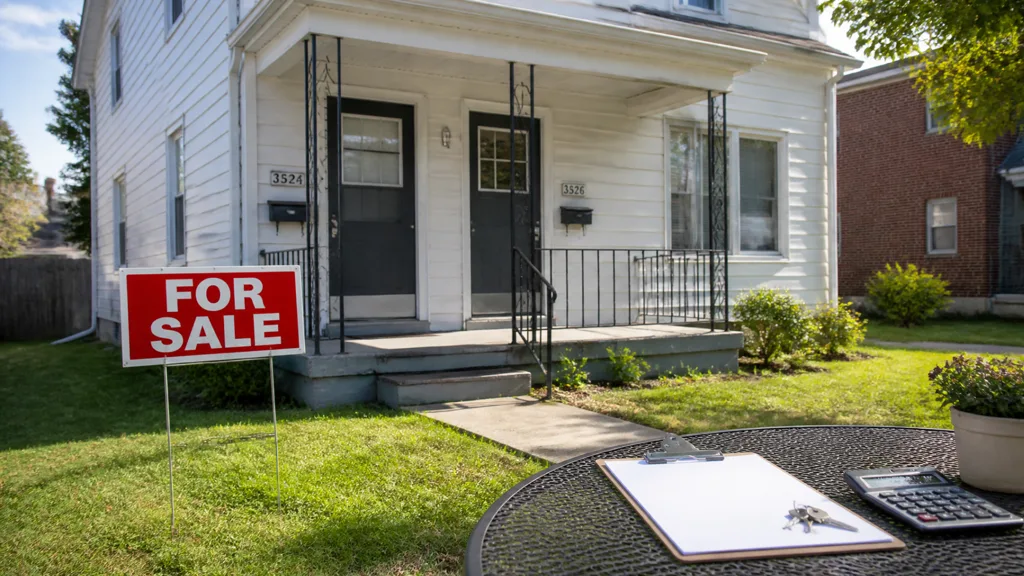



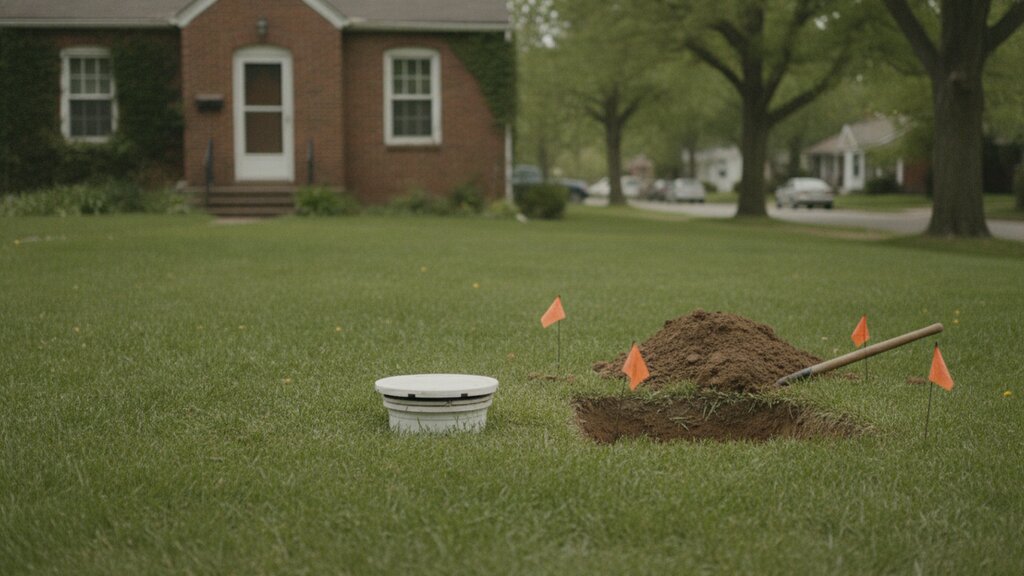
That matters most when you're selling. A buyer's sewer scope can turn up a cracked or separated clay line, and the next question is who fixes it and how long it takes.
This is general information, not legal advice, and every program sets its own rules. Confirm the details with your city hall or the St. Louis County Sewer Lateral Repair Program office at (314) 615-8427 before you rely on them.
What is the St. Louis County sewer lateral program?
It's a fee-funded repair program for the private sewer pipe between your house and the public sewer main. You pay a small yearly fee, and the program pays to dig up and fix a broken lateral.
The lateral belongs to you. MSD says the lateral line, including its connection, is private property, and the owner maintains and repairs it. MSD owns the main in the street. Maryland Heights says most repairs cost at least $3,000, complicated ones can top $10,000, and most homeowners' insurance doesn't cover them.
Missouri law lets a city, town, village or St. Louis County (for the unincorporated area) inside MSD's district charge a yearly fee to cover those repairs. RSMo 249.422 sets the rules:
- Voter approval: The fee needs a majority of voters in that city or area.
- Cap: No more than $50 a year.
- Homes covered: Residential property with six or fewer dwelling units.
- Separate fund: The money goes into a special account used only for lateral repairs.
Ballwin and Maryland Heights voters approved $28 fees in 1999, and Glendale's program began in 1998.
Which homes and municipalities are covered?
Single-family homes and buildings with up to six units are covered, as long as your city or area has a program. Some programs also check that your taxes are paid.
Some examples:
- County-run cities: Lakeshire's residents voted in 2008 to join, and its page says St. Louis County administers the entire program and collects a $50 yearly fee. Oakland contracts with the County too, and its page says the County now pays for the whole repair.
- Ballwin: $28 a year. The city pays up to $4,500 a job, or up to $7,500 in special cases like deep digging or a street cut.
- Maryland Heights: The fee rose from $28 to $50 after a 2014 vote. The program pays 100 percent of a repair up to $10,000 and half of the cost above that.
- Glendale: $50 a year, billed quarterly. The city pays up to $3,000 a repair, including cleaning and diagnostics.
- Twin Oaks: $28 a year, collected through St. Louis County. It works as a reimbursement program.
Condominiums count when their building has six or fewer units. A condo unit with its own lateral is treated as a single home. Under the statute, older programs that started before August 28, 2003 may refuse to enroll a condo or apartment unit whose lateral is already defective.
The City of St. Louis, for example, requires real estate taxes, including any back taxes, to be paid before a property qualifies.
How do you file a claim, and how long does a repair take?
You hire a licensed plumber to prove the line is broken, then apply with the plumber's findings. The program approves the job and a contractor makes the repair. No program page we read gives a fixed timeline.
The usual order:
- Clear and camera the line: A licensed plumber or drainlayer cables the line and confirms the break with a camera. Lakeshire and Ballwin say their programs don't pay for that camera work, so you pay the plumber directly.
- Apply: For County-run programs, Lakeshire says you can get an application from a master plumber on the County's bid list, by calling (314) 615-8427, or online. Oakland says the plumber usually helps fill out the County's form. Ballwin takes applications through its own portal with a $150 fee.
- Approval and repair: In Oakland, County staff take over after the application and arrange a contractor. Ballwin assigns its program contractor, and the city, homeowner and contractor sign a contract. Glendale collects bids from licensed plumbers.
- Inspection and payment: The work is inspected, and the program pays the contractor or reimburses you, up to its limit.
Timing depends on money and urgency. Glendale is pay-as-you-go: non-emergency repairs can go on a waiting list until funds come in, and emergencies go first. If Ballwin's fund runs out for the year, you pay the contractor and get reimbursed up to $4,500 later. The City of St. Louis ranks jobs by severity, with sewage backing up into a home first.
What happens when a buyer's sewer scope finds a broken lateral?
Your sale contract's inspection terms decide what happens next. The program may or may not help, depending on where the house is and whether the line meets its rules.
A sewer scope is a camera run through the lateral, and older lines here are often clay. Ballwin says clay tends to crack, break and separate at joints, and that those defects can sit in a line that still works fine. So a scope on an older St. Louis house can find defects even when the drains work.
Ballwin says plainly that its program is not meant to satisfy a home sale contingency. It sees many applications when a house is being sold and the buyer's scope shows defects with no history of the blockages the program covers. Those repairs aren't covered. If the new owner later has a problem that meets the rules, the new owner can apply. Ballwin also says an approved repair contract is between the city, the homeowner and the contractor, and isn't discussed with agents or buyers.
Other programs may treat a sale differently, so ask your city before you promise a buyer a program repair. A buyer may ask for a repair, a credit or a lower price. Depending on its terms, the buyer may also be able to cancel. A Missouri real estate attorney can read the inspection clause with you.
If your line does qualify, a covered repair can cost you little beyond time. Oakland's page says the County pays for the whole repair. Maryland Heights pays all of it up to $10,000. The City of St. Louis charges no repair fee for an eligible break under the right of way. The camera work and anything over a program's cap are usually yours.
What if your municipality runs its own program, or none?
Then your city's rules apply, and your city hall is the place to ask. Many County cities run their own program, and the City of St. Louis has a separate, narrower one.
Call your city hall and ask four things: what the fee is, what the cap is, whether the program covers repairs requested during a sale, and how long the wait is right now.
The City of St. Louis shows how far rules can differ. Its $28 program fixes only the part of the line under the public right of way. A break under your own yard is entirely yours. The FAQ below has the details.
If your area has no program, the repair is yours alone, the same as any other private plumbing.
Can you sell before the lateral is repaired?
Yes. Nothing in the program rules we read requires a repair before a sale. A known broken line does change the negotiation.
You have a few paths:
- Fix it first: If your program covers it, this may cost little, but you wait on the application, the funds and a contractor.
- Credit or price cut: Get a written plumber's bid and negotiate from it, so the buyer can fix it after closing.
- Sell as-is: Sell to a buyer who expects the repair and prices it in.
We buy houses as-is, in any condition, including deferred maintenance and original systems. Our offer starts from what the house would sell for, then subtracts a realistic repair budget and the costs we carry, and you see each line. If your program would cover the repair and you have time, it may make more sense to file the claim, let the repair run and then list. Our page on how we buy houses shows the math.
Code items are similar. In Mark's story, a Maryland Heights inspector was pushing him over a bathroom, the front pillars and a back deck, and the buyer took on all of it. Read how Mark sold his house as-is. If the house needs more than a sewer line, our page on selling a fixer-upper covers the rest. We work across St. Louis City and County, including Ballwin and Maryland Heights.
Frequently asked questions
Does the program cost the homeowner anything at the time of repair?
Often a little, depending on the program. The camera inspection that proves the break is usually yours: Lakeshire and Ballwin say so. Ballwin also charges a $150 application fee, and you pay anything above its $4,500 cap. Oakland says the County pays for the whole repair, and the City of St. Louis charges nothing for an eligible break under the right of way. Ask your city what you'd owe.
Does it cover the part of the line under the street?
In most programs we read, yes, but check yours. Missouri's statute says a city or county that sets or raises the fee must cover every defective part of the lateral from the house to the public sewer. Ballwin's program runs from the outside wall of the house to the main and patches street pavement. The City of St. Louis covers only the part under the public right of way, not your yard.
What about the City of St. Louis?
The City has its own program, run by the Street Department. Owners of homes with six or fewer units pay $28 a year on their tax bill. It repairs breaks under the public right of way, not under your yard, and it doesn't clear clogs or roots. Taxes, including any back taxes, must be paid. You send a licensed plumber's statement and video, and jobs with sewage backing up go first.
Who pays for a sewer scope?
Your sale contract decides that. Ballwin's page describes the common case: the buyer has a lateral inspection done during the sale. If you scope the line yourself before listing, you pay the plumber. Lakeshire's and Ballwin's programs don't pay for camera work, and Glendale counts its own diagnostics against its $3,000 cap. Ask your agent or a Missouri real estate attorney who pays under your contract, and ask for the video along with the report.
Does a pending repair delay closing?
It can. No program page we read promises a completion date. Glendale may put non-emergency repairs on a waiting list until funds come in, and Ballwin reimburses later if its fund runs dry for the year. Some programs won't treat a sale inspection as a covered repair at all. If a buyer wants the work done before closing, build the timing into the contract.
Are multi-family buildings covered?
Up to six units, yes. Missouri's statute limits the fee to residential property with six or fewer dwelling units, and the City of St. Louis uses the same line. Condos count when the building has six or fewer units, and a condo with its own lateral is treated as a single home. A building with seven or more units is outside these programs, so its lateral repairs are the owner's.
When you're ready
If a sewer scope turned up a broken line and you'd rather not manage the repair, we can give you a written offer to set beside your other options. Take your time with it. See where we buy in St. Louis, send us a message, or call (314) 334-1481.
Sources
- Missouri Revisor of Statutes: RSMo 249.422, Fee imposed to repair lateral sewer service lines
- Metropolitan St. Louis Sewer District: Sewer Backups
- City of St. Louis: Sewer Lateral Repair Program
- City of Lakeshire: Sewer Repair
- City of Oakland, Missouri: Sewer Lateral Repair Program
- City of Ballwin: Sewer Lateral Repair Program
- City of Maryland Heights: Sewer Lateral Program
- City of Glendale: Sewer Lateral Repair Program
- City of Twin Oaks: Sewer Lateral Repair Program