




An iBuyer like Opendoor can work well for a newer, owner-occupied house in good shape. Many St. Louis houses are older brick with stone basements and original systems, and that is where the three routes start to separate.
How an iBuyer offer works
An iBuyer gives you an early estimate online, checks the house's condition, and then makes a final cash offer with its service charge and a repair deduction taken out. Opendoor's help center sets out each step:
- Estimated Home Value: you enter your address and answer questions about condition, upgrades and features. Opendoor calls the result a starting point that hasn't been checked against the house yet.
- Assessment: depending on the market, you photograph each room in the Opendoor Key App, or a team member walks through the house in about an hour.
- Final offer: it arrives within a few business days of the assessment, with the service charge and repair costs listed on your dashboard.
- Closing: you choose a date, typically 21 to 60 days out.
The price starts with automated models built on comparable sales, public records and market data. Opendoor says its pricing team then reviews that number before the assessment findings are added.
The service charge is the first line to read. Opendoor says it covers buying, holding and reselling your house, that it varies by market and property, and that the company does not publish a fixed percentage. The charge is not negotiable. You can ask for a re-evaluation if your home details were wrong or the assessment missed an upgrade.
Repair deductions after the assessment
After the assessment, an iBuyer estimates what it would cost to make the house market-ready and takes that off the offer. Opendoor calls this the condition adjustment.
Opendoor's help center lists what tends to trigger it:
- A roof near the end of its useful life, typically 20 years or more for asphalt shingles, which may get a full replacement estimate.
- Heating and cooling systems older than 15 to 20 years, or ones not performing well.
- Older plumbing and electrical systems, outdated panels, slow drains or exposed wiring.
- Worn flooring, scuffed or peeling paint, outdated appliances and overgrown landscaping.
Opendoor says these are its internal estimates, not contractor quotes, and that the final offer can land above or below the first estimate.
There can be a second check. After you sign, Opendoor says it may schedule a diligence visit. If that visit turns up issues the assessment missed, it may propose a revised offer with updated repair costs.
You don't have to accept revised terms. Opendoor says you can cancel any time before closing with no fee, which is a real protection. It still means the first number on your screen is not the one to plan a move around.
Condition limits on older St. Louis houses
iBuyers set limits on which houses they buy, and older houses are where those limits matter most. Opendoor says homes with major structural damage, serious foundation problems, or extensive fire, water or mold damage may not qualify. Very old homes, pre-1930 in some markets, may not qualify either.
Plenty of St. Louis houses fit that description. Pre-1930 brick, stone basements, cast-iron drain stacks and knob-and-tube wiring are common here. Even when a house clears the age line, original systems are the kind of item Opendoor says it flags, so expect them in the condition adjustment.
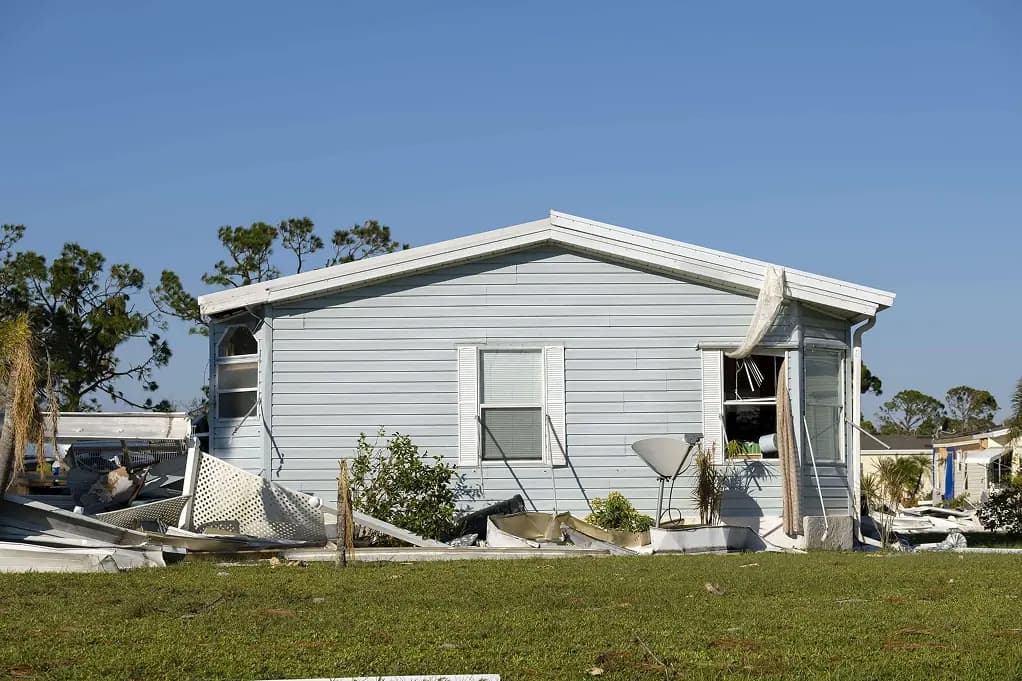
Other limits are about the property rather than its age:
- Opendoor generally requires the home to be vacant at closing, so a landlord has to arrange the tenants' move-out first.
- It buys single-family homes, townhomes and some condos, but not mobile or manufactured homes, buildings with five or more units, commercial property or vacant land.
- Very large lots and agricultural zoning are typically not eligible.
iBuyer vs cash home buyer: how a local St. Louis buyer differs
A local cash home buyer in St. Louis prices the house as it stands and takes on the repairs, tenants and paperwork an iBuyer may decline or deduct for. The tradeoff is that the price reflects that work, so it is not always full market value.
Here is how our offer is built. We start from what comparable updated houses near yours have sold for. Then we subtract a realistic repair budget and the costs we carry, such as closing costs and the months of taxes and utilities while the work gets done. You see each line. Our FAQ puts it this way: "We pay fair prices, but not always full market value. For houses needing repairs, we calculate fair prices by subtracting repair costs." How we buy houses walks through the steps.
Where that differs from an iBuyer:
- Condition: we buy as-is, in any condition, from deferred maintenance to original systems. We buy houses with knob-and-tube wiring and stone basements without repairs, as our Kirkwood page describes.
- Tenants: we buy with tenants in place, and no eviction is required. Selling a house with tenants explains how that works.
- Costs: no agent, no commission and no closing costs passed to you. Our costs appear as lines in the offer itself.
- City and tax problems: we buy houses with back taxes owed or open code items, as-is.
- Paperwork: we work with a power of attorney when one applies, and a dedicated transaction coordinator handles each sale.
- Timing: we can make an offer within 24 hours. We can close in as little as 7 days when the title is clear; 30 to 60 days is typical.
Mark's house in Maryland Heights is an example. A city inspector was pressing him over a bathroom, the front pillars and a back deck, which he would have had to fix before listing. Our offer met his $160,000 as-is target, and the close fit his plan to be out in about 60 days. Mark's story has the rest.
Our FAQ also says we may connect a seller with other trusted buyers, so ask any buyer, us included, whose name will be on the contract. To check us first, see our 372 Google reviews with a 4.9 average and our BBB A+ rating.
When listing is the better Opendoor alternative
If your house is in good shape, should appraise well and you have time for showings, a listing may well net more than either cash route. Buyers with mortgages compete on price, and there is no service charge or repair budget built into their offers.
A listing has its own costs and risks. You pay a commission, which NAR says is negotiable between you and your broker. A buyer's inspection can lead to repair requests or a credit at closing.
If the appraisal comes in below the price, the CFPB says the buyer can often use it to negotiate the price down, or may cancel if you won't lower it. Until closing, you keep paying the mortgage, taxes, insurance and utilities.
Listing fits best when the house is updated, showings are easy and you can wait out a lender's timeline. Ask an agent to estimate what you'd net, not just a list price, so you have a third number.
A cash sale fits better when the repair list is long, the house has tenants or open code items, or you'd rather not have strangers walk through. Our as-is sales for houses that need work cover that case. An iBuyer sits in between: no showings and a date you choose, for houses inside its criteria.
How to compare offers line by line
Compare offers on what you would net at closing, not the headline price. Ask every buyer for the offer in writing with each deduction listed, then put the lines next to each other:
- Price: the gross offer, and whether it is final or an estimate before an assessment.
- Fees: any service charge, commission or admin fee, in dollars.
- Repairs: any condition adjustment, repair credit, or work you must finish before closing.
- Closing costs: who pays title, recording and settlement fees, and the property taxes you owe through closing.
- Holding costs: each extra month means another mortgage payment, plus taxes, insurance and utilities.
- Conditions: inspection, appraisal and financing contingencies, and whether the price can change after you sign.
- Timing and occupancy: the closing window, whether tenants must be out, and whether you can stay a few days after closing.
- The buyer: whose name goes on the contract.
Then weigh each line against your time. A higher net that depends on six weeks of showings is a different offer from a slightly lower one with a fixed date and no repairs.
This is general information, not legal advice. If a contract term affects your sale, talk to a Missouri real estate attorney before you sign.
Frequently asked questions
Can you sell your house to Opendoor in St. Louis?
Opendoor says it buys single-family homes in every postal code in the lower 48 states where they exist, which takes in St. Louis. Whether it buys your house depends on the property. Its help center says very old homes, pre-1930 in some markets, may not qualify, and neither may houses with major structural or foundation problems. Entering your address on Opendoor's site gives you an answer in under a minute.
What are some companies like Opendoor?
The closest are other iBuyers, which make online offers on a similar model, and local cash buyers like us, who price the house as it stands, older houses and rentals with tenants included. Each company sets its own fees, markets and terms, so read its current pages and ask for an itemized offer. A listing agent is the other alternative, and often the right one for a house in good shape.
Is an iBuyer the same as a cash home buyer?
Both pay without a mortgage, so the sale doesn't depend on a buyer's loan. The model is what differs. Opendoor starts from automated pricing reviewed by its team, checks condition with photos or a walkthrough, then takes a service charge and a repair adjustment from the offer. We subtract repairs and our costs inside the offer, with each line shown. We also buy houses an iBuyer's criteria may exclude, such as rentals with tenants in place.
Can an iBuyer lower its offer after I sign?
It can propose a lower one. Opendoor says that after you sign, it may schedule a diligence visit, and if new issues turn up, it may propose a revised offer with updated repair costs. You don't have to accept the revised terms, and Opendoor says you can cancel any time before closing with no fee. Other companies write their own contracts, so check when the price can change before you sign.
Does knob-and-tube wiring rule out an iBuyer sale?
Not on its own, going by Opendoor's pages. They don't name knob-and-tube. They do say older electrical systems, outdated panels and exposed wiring may be flagged in the condition adjustment, and that very old homes may not qualify in some markets. We buy St. Louis houses with knob-and-tube wiring and stone basements without repairs, so you can get a number from us either way and compare.
Do you pay closing costs when you sell to us?
Yes, in the sense that matters: there is no agent and no commission, and no closing costs are passed to you. Our own costs appear as lines in the offer instead. We buy as-is, so you don't pay for repairs either. If you still owe on a mortgage, it is paid off from the sale at closing, the same as with any other buyer.
Get a second number, no pressure
If you have an iBuyer offer in hand, or you're still deciding whether to list, you're welcome to set ours beside it. Read how we buy houses, then send us a message or call (314) 334-1481 when it suits you.
Sources
- Opendoor Help Center: How does selling your home to Opendoor work? (updated July 17, 2026)
- Opendoor Help Center: How does Opendoor determine my offer price? (updated March 2, 2026)
- Opendoor Help Center: What's included in my Opendoor offer? (updated March 10, 2026)
- Opendoor Help Center: What is Opendoor's service charge? (updated March 10, 2026)
- Opendoor Help Center: Can I negotiate my Opendoor offer or the service charge? (updated July 17, 2026)
- Opendoor Help Center: What is the condition adjustment (repair costs)? (updated March 2, 2026)
- Opendoor Help Center: Why did my offer amount change from the preliminary to the final? (updated March 2, 2026)
- Opendoor Help Center: What is the home assessment and how do I prepare? (updated March 2, 2026)
- Opendoor Help Center: Can I cancel my sale to Opendoor? (updated March 2, 2026)
- Opendoor Help Center: What types of homes does Opendoor buy? (updated August 10, 2026)
- Opendoor Help Center: Where does Opendoor buy homes? (updated March 4, 2026)
- Consumer Financial Protection Bureau: My appraisal is less than the sale price. What does that mean for me? (last reviewed September 11, 2024)
- National Association of Realtors: The Truth About the NAR Settlement Agreement