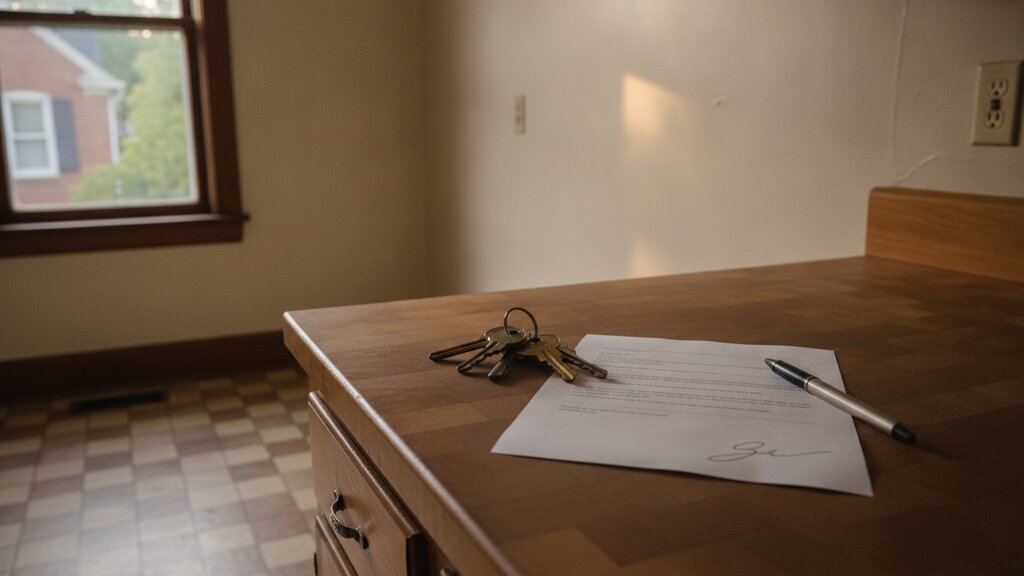




You own the house until the sale, and you still have choices: catching up, changing the loan, a short sale, selling while there is equity, or a deed in lieu.
How does the foreclosure process in Missouri work?
Missouri lets the holder of a deed of trust foreclose by a lawsuit or by a trustee's sale, at its option (RSMo 443.410). The trustee's sale needs no judge.
A deed of trust has three parties: you, the lender, and a trustee who holds the power to sell if the loan goes into default. The standard Fannie Mae and Freddie Mac Missouri form, Form 3026, works this way, and the stages below follow it. Your own deed of trust may differ, so read it.
Stage 1: missed payments and the 120-day review period
Federal Regulation X generally bars a servicer from making the first foreclosure notice or filing until you are more than 120 days behind, which leaves room for loss mitigation.
The servicer has to try to reach you by phone or in person by the 36th day of a delinquency, and send a written notice about loss mitigation options by the 45th day. If you send a complete loss mitigation application during the 120 days, the servicer cannot start foreclosure until it has told you that you don't qualify and any appeal is over, you turn down every offer, or you fall behind on an agreement.
- Ask the servicer what a repayment plan, forbearance or loan modification would require, then send the application in full and keep dated copies.
- Talk to a HUD-approved housing counselor. The CFPB's Find a Counselor tool lists them, and the HOPE Hotline is (888) 995-4673.
- Get a rough value for the house, so you know whether there is equity to protect.
Under federal Regulation O, a company selling help with a loan modification or foreclosure generally cannot charge you until you have signed an agreement with your lender based on an offer the company got for you. Our post on falling behind on mortgage payments covers the options at this point.
Stage 2: the notice of default
The notice of default is a letter your lender sends under the deed of trust. On the standard Missouri form, it names the default, what it takes to cure it, and a cure date at least 30 days out.
It also explains your right to reinstate and to dispute the default in court. If the default isn't cured by that date, the lender can demand the whole balance and invoke the power of sale, and it can add its enforcement costs, such as reasonable attorney's fees and inspection fees.
Reinstating means paying what is past due plus those costs, and the loan goes on as before. Ask the servicer for that figure in writing. Our guide to the notice of default in Missouri explains the letter in more detail.
Stage 3: the notice of sale under Missouri foreclosure laws
Missouri's foreclosure laws require at least 20 days' notice of the sale, by newspaper and by certified or registered mail. A deed of trust that calls for longer notice controls.
- The sale is held in the county where the house is (RSMo 443.310).
- The newspaper notice describes the property and the deed of trust and gives the time, terms and place of sale. In counties with a city of 50,000 or more, it runs in a daily paper at least 20 times up to the sale day; elsewhere, in four weekly issues, the last within a week of the sale (RSMo 443.320).
- At least 20 days before the sale, the notice is mailed to the borrower at the last known address, to the record owner, and to anyone who recorded a request for notice (RSMo 443.325). The law counts the mailing, so the notice can be valid even if it never reached you.
A trustee may postpone a sale once, by up to seven days, with an announcement at the sale. A longer delay needs new notice unless you and the lender agree otherwise (RSMo 443.355).

If a complete loss mitigation application reaches the servicer more than 37 days before the sale, the servicer cannot hold the sale while it reviews the application, while an appeal is pending, or while you keep up with an agreement it offered. On the standard Missouri form, the right to reinstate runs until five days before the sale, if you meet its conditions.
Stage 4: the trustee's sale
The trustee sells the house at a public auction to the highest bidder, and the lender may bid. The buyer receives a trustee's deed with no warranty of title.
Under the standard form, the money goes first to the costs of the sale, including reasonable trustee's and attorney's fees, then to the loan, and then any excess to the people legally entitled to it. If the house brings more than the debt, that surplus can belong to you, so ask the trustee how to claim it.
Can you get the house back after a Missouri foreclosure sale?
Only in a narrow case: Missouri's one-year redemption right applies when the lender, or someone buying for it, buys at the sale, and only if you gave the trustee written notice of your intent to redeem at the sale or within 10 days before it (RSMo 443.410).
Within 20 days after the sale, you also have to post a bond approved by the circuit court, covering a year of interest, the sale costs, taxes and other sums (RSMo 443.420). Then, within the year, you pay the full debt with interest and the buyer's costs, far more than reinstating would have taken. If a third party buys at the auction, the right does not apply. Talk to a Missouri real estate attorney before counting on it.
What happens after the trustee's sale?
The buyer takes title. If you are still in the house, Missouri law treats staying on as unlawful detainer once you have written notice of the foreclosure and a written demand for possession, and the new owner can go to court (RSMo 534.030).
- A lender can sue for a deficiency, the part of the debt the sale did not cover. Missouri courts measure it as the debt minus the foreclosure sale price, as long as the sale was fairly conducted, and not by the home's market value.
- Most negative information can stay on a credit report for seven years, the CFPB says. Fannie Mae's rules for the loans it buys call for a seven-year wait after a foreclosure (three years with documented extenuating circumstances) and four years after a short sale or deed in lieu.
- If the lender forgives what is left, the IRS generally treats the forgiven amount as income.
Your options at each stage
Several of these need the lender's approval and time to process, so the closer the sale date, the fewer stay realistic.
- Reinstatement: pay what is past due plus fees, and the loan continues. It fits when the hardship is over and you have the cash.
- Repayment plan, forbearance or modification: loss mitigation through the servicer. A modification can lengthen the term, lower the rate, or forbear or reduce principal. The CFPB warns that if you still can't make the new payment, you may lose the home.
- Short sale: you sell for less than you owe, with the lender's agreement, and you move. Ask for a written waiver of any deficiency. Our post on short sales and foreclosures has more on how one works.
- Sale with equity: if the house is worth more than the payoff and selling costs, a sale pays the lender at closing and the rest is yours. It works up to the sale date if the closing can happen in time.
- Deed in lieu: you hand ownership to the lender. The CFPB says to make sure it covers the entire amount you owe and to get any deficiency waiver in writing. Any equity goes to the lender with the deed.
- Bankruptcy: under Chapter 13, the automatic stay stops a foreclosure as soon as the petition is filed and lets you catch up over time, but it cannot undo a sale finished before filing. Talk to a bankruptcy attorney.
Selling before the sale date: when it fits and when it doesn't
A sale fits when the house is worth more than what you owe and you are ready to move. The title company pays the loan at closing, and what is left after the payoff and costs comes to you.
Ask for a written payoff statement early. Under Regulation Z, a servicer normally has seven business days to send one, but while a loan is in foreclosure the deadline becomes a reasonable time.
A listing can bring more when the house shows well and there is time for showings and a buyer's loan approval. We buy as-is, with no repairs or showings, and no closing costs passed to you. We can make an offer within 24 hours. We can close in as little as 7 days when the title is clear; 30 to 60 days is typical. As our FAQ puts it, "We pay fair prices, but not always full market value."
We're the wrong fit in two cases. If you owe more than the house is worth, a sale to us won't close the gap, and a short sale or modification fits better. If your income is back and you want to stay, start with the servicer. Our page on selling a house before foreclosure covers the timing, and how we buy houses shows how we build an offer, line by line. Chris and the team work from 8711 Watson Rd in Webster Groves, and homeowners have left 372 Google reviews with a 4.9 average.
Frequently asked questions
How long does foreclosure take in Missouri?
For a home you live in, about 140 days at the earliest from the first missed payment. Federal rules generally bar the first foreclosure notice until you are more than 120 days behind, and Missouri requires at least 20 days' notice before the sale. A loss mitigation review, a postponement or a bankruptcy can push it later. A rental you don't live in falls outside the federal rule.
Is Missouri a judicial or nonjudicial foreclosure state?
Both routes exist. Missouri law lets the holder of a deed of trust foreclose by lawsuit or by trustee's sale, at its option. The standard Fannie Mae and Freddie Mac Missouri deed of trust gives the lender a power of sale, so a trustee can auction the house after the required notice with no court case.
Can I still sell my house after the notice of sale is published?
Usually, yes. You own the house until the trustee's sale, and a sale that pays the loan in full ends the foreclosure. You need a payoff statement, a buyer and a closing before the sale date. If the dates look tight, tell the servicer you have a sale under contract and ask in writing whether the sale can be postponed.
Can the bank come after me for the balance after a Missouri foreclosure?
Yes. In a bank foreclosure in Missouri, the lender may sue for a deficiency, the part of the debt the sale did not cover. Missouri courts measure it from the foreclosure sale price, not market value, so a low auction price leaves a larger balance. With a short sale or deed in lieu, ask for a written deficiency waiver.
Will I owe tax on mortgage debt the lender forgives?
Possibly. The IRS generally treats canceled debt as income. Its exclusion for debt on a main home covers debt discharged before January 1, 2026, or under a written arrangement made before then. Other exclusions, such as insolvency or a bankruptcy discharge, can still apply. If a lender forgives part of your loan, talk to a tax adviser before you file.
Talk it over before the sale date
If you'd like an offer to set beside your payoff and your servicer's options, read selling a house before foreclosure, send us a message, or call (314) 334-1481. There's no pressure either way. This guide is general information, not legal or tax advice; talk to a Missouri real estate attorney about your loan and your dates.
Sources
- Missouri Revisor of Statutes: RSMo 443.310
- Missouri Revisor of Statutes: RSMo 443.320
- Missouri Revisor of Statutes: RSMo 443.325
- Missouri Revisor of Statutes: RSMo 443.355
- Missouri Revisor of Statutes: RSMo 443.410
- Missouri Revisor of Statutes: RSMo 443.420
- Missouri Revisor of Statutes: RSMo 534.030
- FHFA: Form 3026, Missouri Deed of Trust
- CFPB: 12 CFR 1024.41, loss mitigation
- CFPB: 12 CFR 1024.39, early intervention
- CFPB: 12 CFR 1024.30, scope
- CFPB: 12 CFR 1026.36, payoff statements
- eCFR: 12 CFR 1015.5, advance fees
- CFPB: How does foreclosure work?
- CFPB: What is a mortgage loan modification?
- CFPB: What is a short sale?
- CFPB: What is a deed-in-lieu of foreclosure?
- CFPB: How long does information stay on my credit report?
- Eighth Circuit: M&I Marshall & Ilsley Bank v. Sunrise Farms (2013)
- Fannie Mae: Selling Guide B3-5.3-07, waiting periods
- United States Courts: Chapter 13, Bankruptcy Basics
- IRS: Topic no. 431, Canceled debt